
The Problem With the Word “Hinduism”
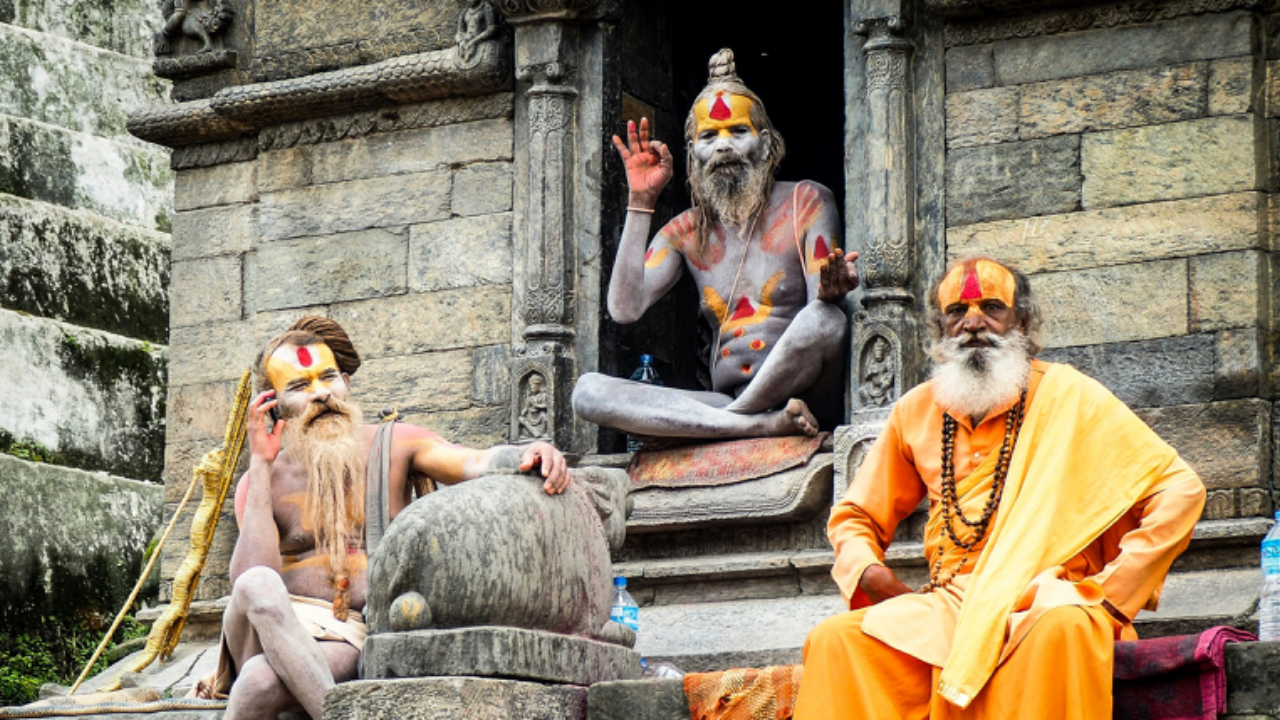
Why the Word Falls Short of the Traditions It Tries to Describe
There’s a question that comes up often—especially as more people begin to explore yoga philosophy beyond the physical practice:
What is “Hinduism”… really?
I myself get asked a lot, “Are you Hindu”.... And I always cringe a bit, because I want to answer truthfully, but also respectfully…because, more importantly than whatever faith I do or dont practice : Is that even the right word for what we’re studying and practicing?
The truth is—this word, Hinduism, doesn’t quite capture the depth, diversity, or origin of the traditions it’s used to describe.
Let’s take a closer look. What Does “Hinduism” Really Mean?
The Word “Hindu” Was Never Originally a Religion
The term Hindu doesn’t begin as a spiritual or religious identity.
It begins with geography.
It comes from the Indus River, known in Sanskrit as Sindhu.
Ancient Persian speakers pronounced it as Hindu, referring simply to the people who lived on the other side of the river.
That’s it.
👉 It meant: people of a place.
Not a belief system.
Not a philosophy.
Not a unified tradition.
So Where Did “Hinduism” Come From?
Centuries later, when European colonizers (including the Portuguese Empire) arrived in India, they encountered something vast, complex, and unfamiliar.
There were:
- Ritual traditions
- Philosophical schools
- Devotional practices
- Yogic disciplines
- Regional customs
And instead of understanding each of these on their own terms…
They grouped them all together.
Anyone who wasn’t Muslim or Christian became labeled as “Hindu.”
Over time—especially under British rule—this evolved into something more rigid:
👉 A category.
👉 A system.
👉 A “religion” called Hinduism.
The Problem With That Label
At first glance, it might seem harmless.
But this label does something subtle—and significant:
It flattens something that was never meant to be one thing.
What we now call Hinduism is not a single, unified system.
It’s a vast ecosystem of traditions that includes:
- The philosophical teachings of texts like the The Bhagavad Gita, Yoga Sutras of Patanjali
- The devotional paths of Bhakti and teachings from saints like Ramanuja, and stories like The Ramayana
- The inquiry-based wisdom of the Upanishads
- Ritual traditions rooted in the Vedas
- Tantric lineages and its own philosophical texts
- Folk and regional practices across India
Some of these traditions:
- Believe in a personal God
- Some speak of an impersonal absolute
- Some are dualistic
- Some are radically non-dual
They don’t all agree.
They weren’t designed to.
AND….Sometimes they borrow from each others philosophies
And yet—they’ve all been placed under one umbrella : Hinduism
A Western Lens on Something That Isn’t Western
Another layer to this:
The idea of a “religion” as a single, defined system—with:
- One founder
- One central text
- One set of beliefs
…is a Western framework.
And when that framework was applied to these traditions, something got lost. Very Lost!
Because these teachings were never meant to be confined in that way.
They were meant to be:
- Lived
- Practiced
- Explored
- Discussed (with your Guru)
- Realized (through years of application)
So What Is the More Accurate Way to Understand It?
Instead of thinking in terms of “Hinduism,” it can be more true to the roots of these teachings to think in terms of:
- Dharma — a way of living in alignment with truth
- Darshana — a philosophical perspective or “way of seeing”
- Sampradaya — a lineage or teaching tradition
Or more broadly:
A living tapestry of wisdom traditions that evolved over thousands of years.
Sometimes referred to as Sanatanam Dharma (eternal truth)
Why This Matters (Especially for Yoga Practitioners)
If you’re practicing yoga—especially beyond the physical—
This understanding matters.
Because it invites you to:
- Approach these teachings with curiosity instead of assumption
- Recognize that there isn’t just one way to understand truth
- Honor the depth and diversity of the traditions you're engaging with
- Understand the variety of approaches to understanding Source, the nature of Self and our relationship to it
And maybe most importantly:
It frees you from trying to fit something vast into something small.
A Closing Reflection
The word Hinduism is not “wrong.” as it has been adopted and accepted in to modern day culture
But it is incomplete. It also perpetuates the colonization of Yogic Wisdom and its rich diversity of teachings, practices and techniques that lead to certain goals and outcomes specific to each tradition and lineage.
And when we begin to see that…
We open the door to a much richer relationship with these teachings.
Not as a fixed system to believe in,
But as a living body of wisdom to explore, question, and embody.
And we can decolonize yoga in the west by moving away from this word, and moving towards a deeper understanding of vedic culture, vedic teachings and sanatanam dharma in its wide diaspora throughout Southeast Asia
Journal Prompt
Where in your life might you be trying to fit something vast… into a label that’s too small?
Ready to Explore the True Depth of Asana Beyond the Mat?
WE INVITE YOU TO JOIN US AT OUR YOGA STUDIO
This is where the true spirit of yoga is alive and accessible to all bodies, regardless of experience or background. By offering a space rooted in inclusivity, we create an environment where everyone can experience the transformative power of yoga.
Come as you are, and together, let’s grow, connect, and cultivate peace within. Join us on the mat today, and support the movement to keep yoga accessible for all.
JOIN THE MOVEMENT
STAY CONNECTED & INSPIRED
Join our community to get exclusive updates, inspirational content, and special offers. Your journey to wellness starts here!
