
The Roots of Yoga: What the Four Vedas Actually Teach
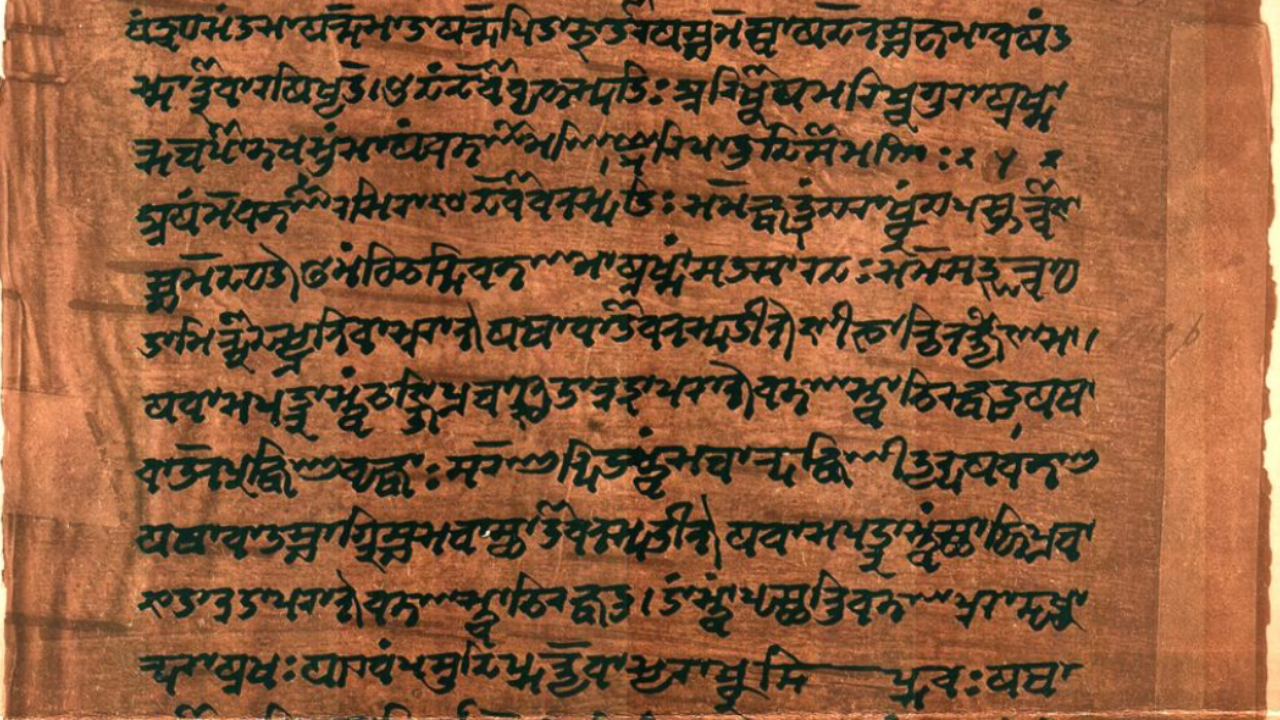
Understanding the Foundation of Yoga Philosophy
When we begin to explore yoga beyond the poses, we inevitably come across the term “Vedas.”
Maybe you haven't, but you have heard the word Hindu… this is a label, a not of a helpful one, so for a moment, let me briefly define this label for you (before we get into the Vedas).
The word you often hear associated with yoga philosophy and yogic spirituality, and even religion, is Hinduism. This is not a very clear or even correct term for the vast body of knowledge and philosophical wisdom that comes from yoga and its many varieties of traditions, lineages and teachers. Hinduism is a word that was used by colonialists (its a long story, we will unpack it in next months blog article). In short, originally, “Hindu” didn’t mean a religion at all.
It meant: “people of a place.” used by many different cultures and people of other lands or religions to define those who lived in the East of the Sindhu River or by Sindhu River (known as Indus River in English). Under British colonial rule, this categorization became even more rigid:
- “Hinduism” was formalized as a single “religion”
- Census systems forced people into defined categories
- Diverse traditions were grouped under one label
So, this is one of the many reasons defining what yoga is and its many varied expressions, beliefs, practices and goals can be so confusing. It's a vast vast body of knowledge that informs and influences many different paths, approaches, techniques and definitions of liberation stemming from Vedic Teachings — not a homogenized label of one “religion” called Hinduism
And for many students (and even teachers), it can feel… a little overwhelming. I am sure that even as you read this, it may feel difficult to piece together this thing that is... Ancient. Vast. Hard to grasp.
But what if I told you the understanding of the sacred literature and text of India wasn’t something complicated to decode... at least the throughline of the dissemination of the knowledge.
Decoding the text themselves, well, that's another story. To help you decode the texts and the depth of philosophy, that absolutely requires a teacher (or many) if you want the depth!
What if I told you this body of knowledge we summarize into one word, Yoga, was simply a reflection of how human beings have always tried to understand life, the universe, and the sacred? And how we most harmoniously can interact and orient with it, or not, and what happens when we do.
In this post, we’ll break down the four Vedas in simple, relatable terms so you can begin to see how they form the foundation not only of yoga philosophy, but of a much deeper way of living.
What Are the Vedas?
The word Veda comes from the Sanskrit root vid, which means:
“to know”
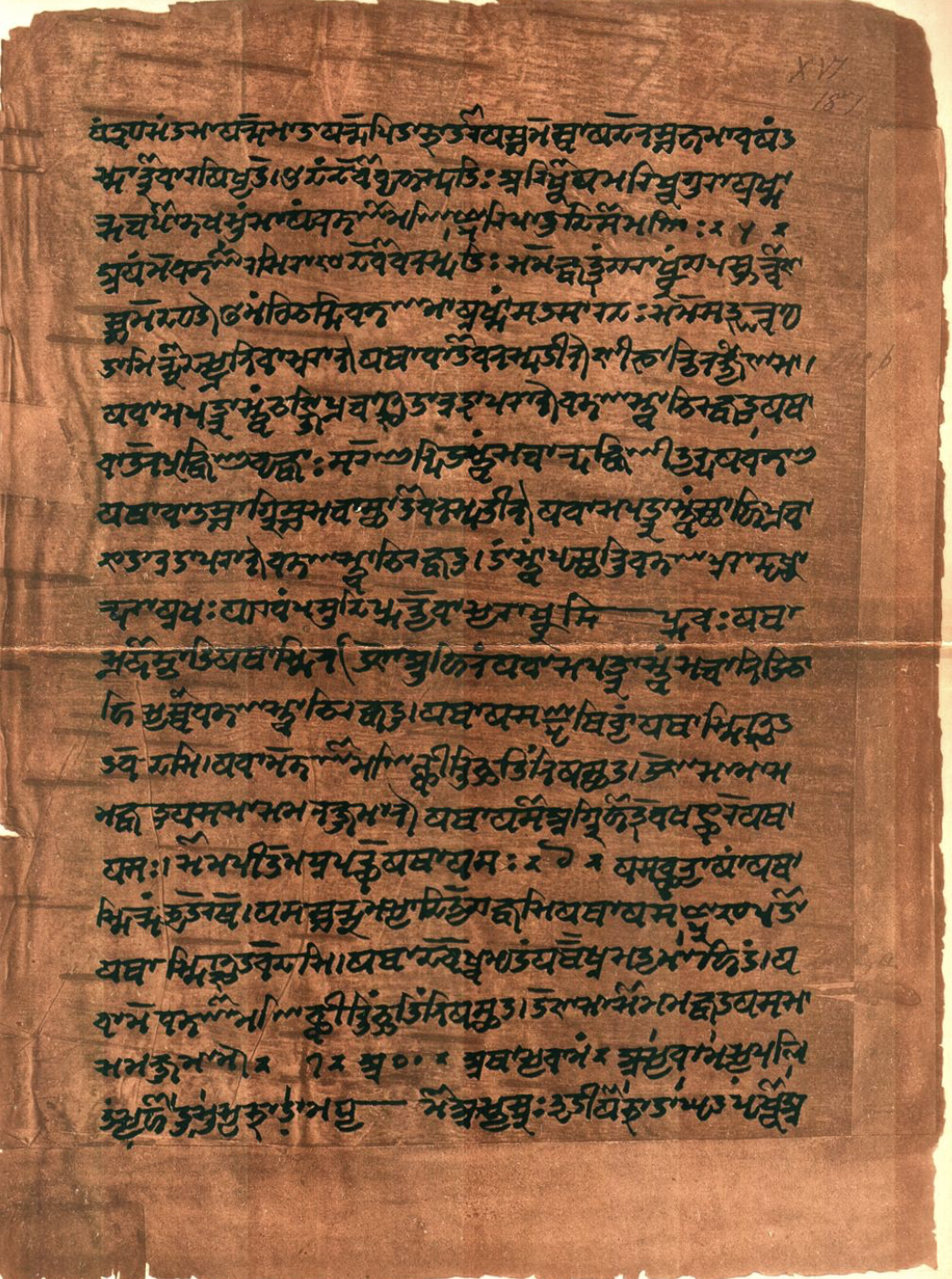
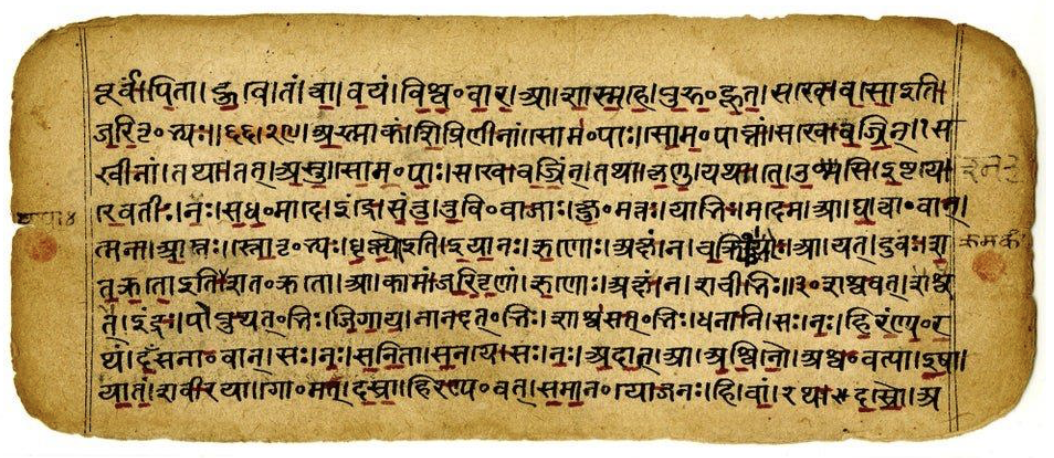
The Vedas are some of the oldest spiritual texts in the world, originating in ancient India thousands of years ago.
They are not one single book, but a collection of texts that explore:
- The nature of reality
- Humanity’s relationship to the divine
- Ritual, devotion, and sacred living
And they are traditionally divided into four Vedas, each with a distinct focus.
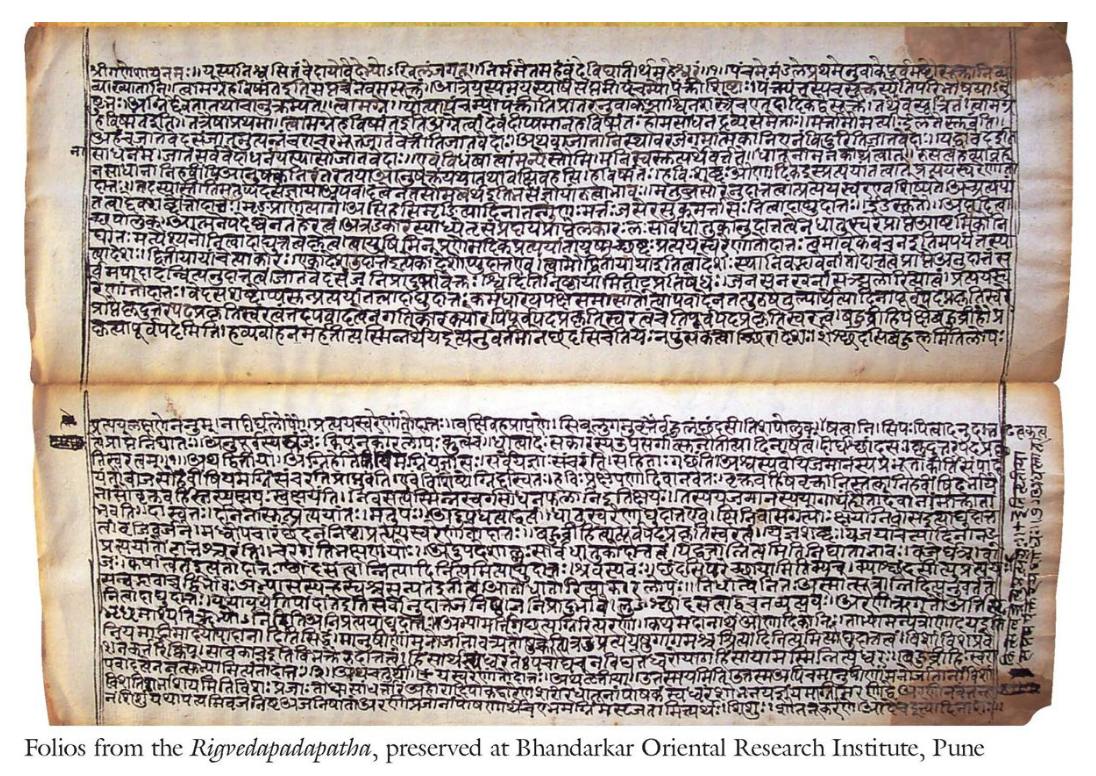
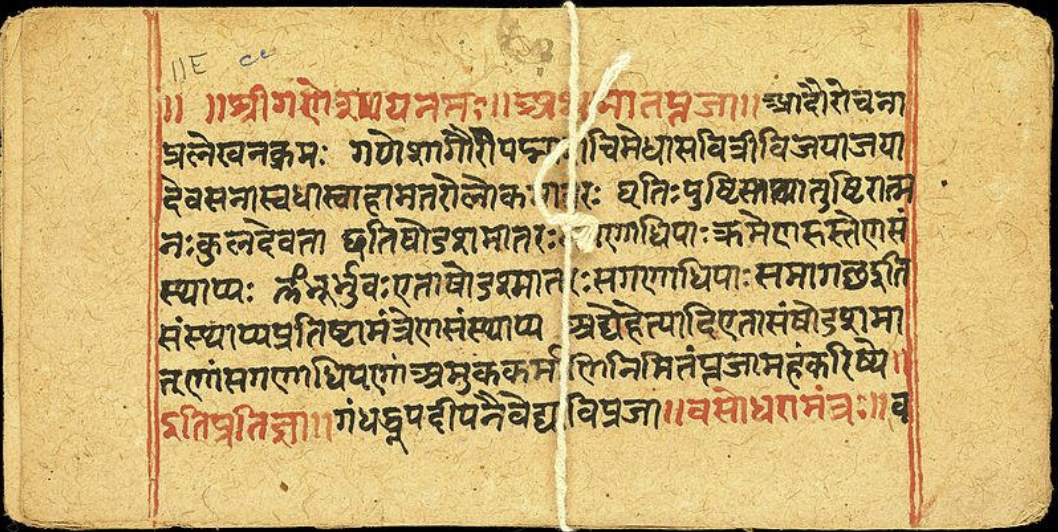
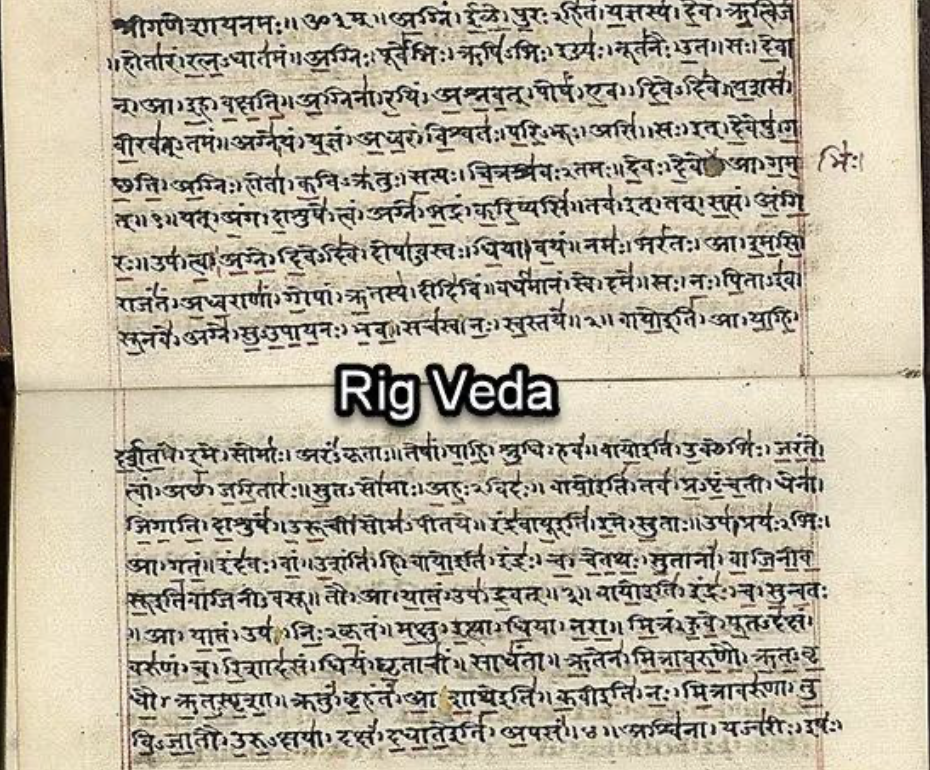
1. Rig Veda — The Poetry of Existence
The Rig Veda is the oldest of the four, and in many ways, the most poetic.
It is a collection of over 1,000 hymns (originally this knowledge was taught and disseminated in song, through chanting, hence referring to them as hymns) written by ancient sages who were observing the world around them with awe and curiosity.
They wrote about:
- Fire
- The sun and the dawn
- Storms and the sky
- The unseen intelligence behind it all
This wasn’t religion in the way we think of it today.
It was wonder.
Humans looking at existence and asking and answering :
What is this? Where did it come from? What is guiding all of this?
Simple takeaway:
The Rig Veda is about recognizing the sacred in the universe.
2. Sama Veda — The Power of Sacred Sound
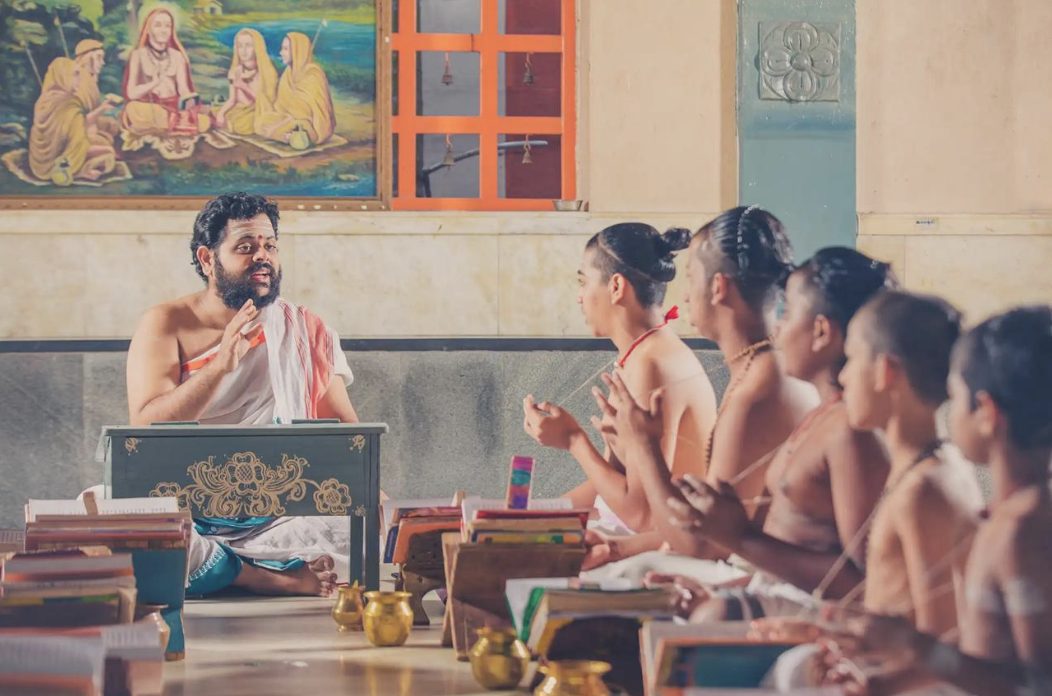
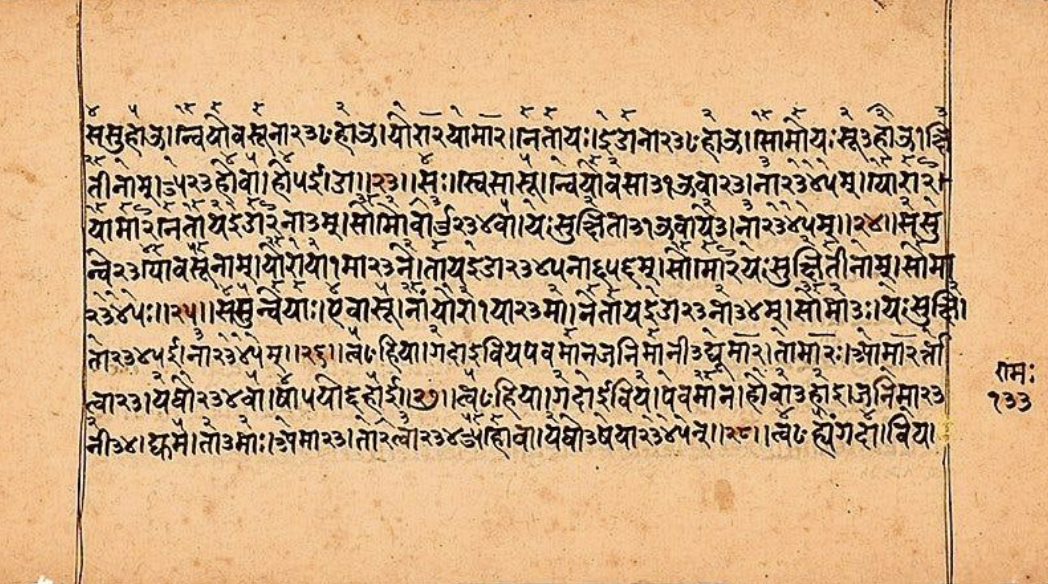
The Sama Veda takes many of the same hymns from the Rig Veda… but transforms them into music.
This Veda is all about chanting.
It teaches:
- How to sing the sacred hymns
- The importance of tone, rhythm, and melody
- The spiritual power of sound
This is where we begin to see the roots of practices like:
- Mantra
- Kirtan
- Nāda Yoga (the yoga of sound)
Simple takeaway:
The Sama Veda is about experiencing the sacred through sound and vibration.

3. Yajur Veda — Sacred Action & Ritual
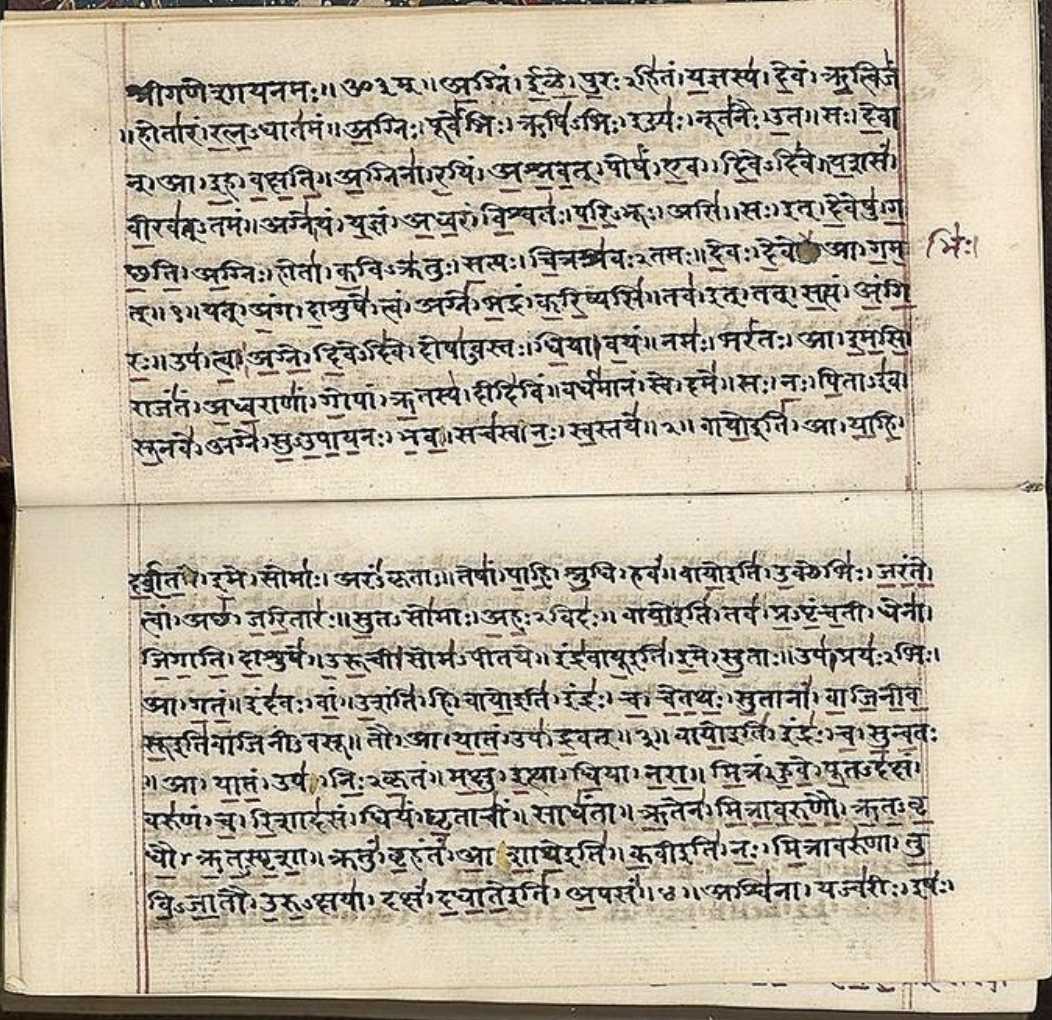
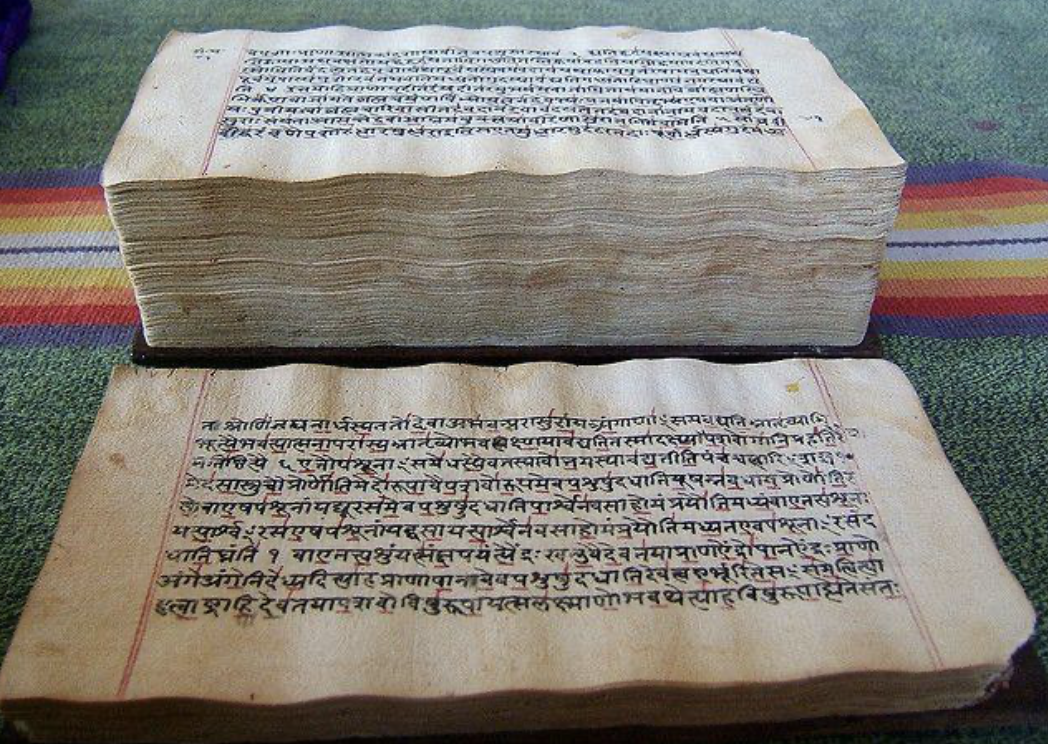
The Yajur Veda is much more practical.
If the Rig Veda gives the words and the Sama Veda gives the music…
The Yajur Veda gives the instructions.
It outlines:
- How to perform rituals (yajña)
- What mantras to recite
- The structure and intention behind sacred ceremonies
At its core, it teaches something powerful:
Spirituality isn’t just something we think or feel.
It’s something we do.
Simple takeaway:
The Yajur Veda is about bringing the sacred into action.
4. Atharva Veda — Spirituality in Everyday Life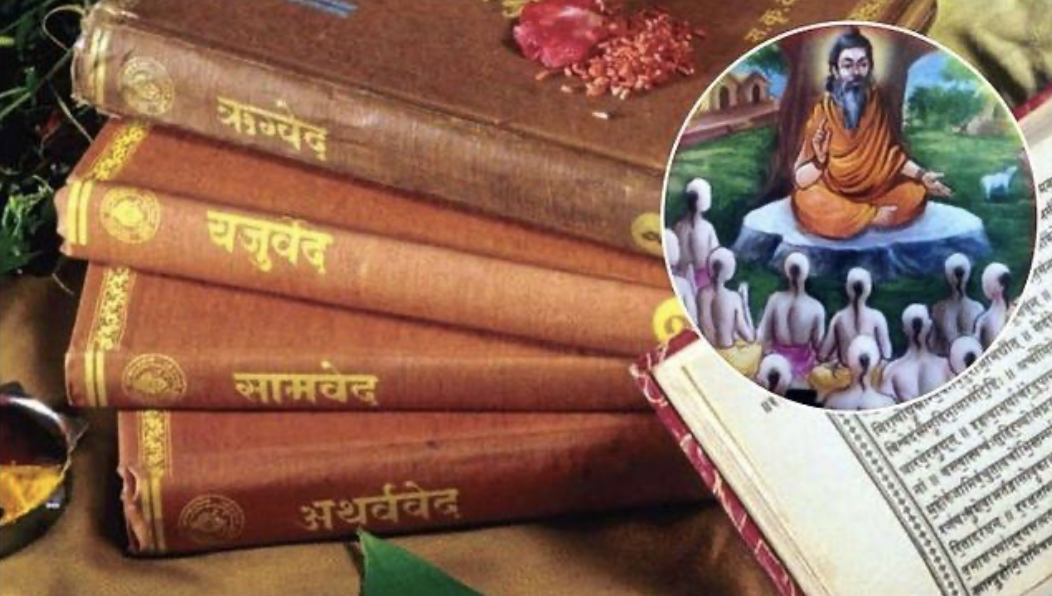
The Atharva Veda feels the most relatable for modern life.
It moves away from large ceremonial rituals and into the human experience.
It includes:
- Prayers for health and healing
- Blessings for relationships and home life
- Reflections on the mind and emotional states
- Protection and wellbeing
This Veda recognizes that spirituality isn’t separate from life…
It is life.
Simple takeaway:
The Atharva Veda is about living your spirituality day-to-day.
A Simple Way to Understand All Four
If you were to distill the Vedas down to their essence:
- Rig Veda → Wonder (seeing the sacred)
- Sama Veda → Devotion (feeling the sacred through sound)
- Yajur Veda → Action (practicing the sacred)
- Atharva Veda → Integration (living the sacred)
Or even more simply:
Words → Music → Action → Life
Why This Matters for Yoga Students Today
Most of us didn’t come to yoga through the Vedas or through lineage.
We came through movement. Through breath. Through the desire to feel better.
But the Vedas remind us of something deeper:
Yoga is not just a practice you do for an hour and a half or so.
It is part of a much larger tradition—one that asks:
- How do you see the world? How do you relate to the world around you?
- How do you relate to something greater than yourself?
- How do you live with intention, awareness, and integrity?
From the Vedas to Yoga — The Evolution of Wisdom
As time went on, the teachings of the Vedas evolved and became more internal and philosophical.
This progression looks something like:
- Vedas → Focus on ritual, sound, and cosmic understanding
- Upanishads → Turn inward toward self-inquiry (Who am I?)
- Bhagavad Gita → Apply these teachings to real life and how to take action
- Yoga Sutras → Systematize practice of the inner path of the mind
What began as external ritual slowly became an internal practice of awareness.
Bringing It Back to Your Practice
You don’t need to study the Vedas in depth to benefit from them.
But you can let their essence guide you.
- Can you move through your day with more wonder around the sacredness and divine intelligence of it all?
- Can you connect to your breath, your voice, your practice as something sacred?
- Can your actions become more intentional and rooted in connection with your true self and source?
- Can your life itself become your practice of applying the knowledge and insights yoga philosophy has to offer you?
Because at the end of the day…
The Vedas aren’t asking you to become someone else.
They are inviting you to recognize what is already sacred within and around you. And to live in divine alignment with that.
Closing Reflection
Take a moment to reflect:
Where in your life are you being invited to move from practice into embodiment? Where can you go deeper than the surface activity of just going through the motions, deeper than nailing that handstand and really steep in the divine knowledge that this practice carries with it? If your yoga practice isn't changing the way you are living your life, you aren't practicing yoga. At that point it's just fancy and trendy exercise! Where can you connect more with what yoga has to offer you? (if you read this whole article, thats a great start!)
Ready to Explore the True Depth of Asana Beyond the Mat?
WE INVITE YOU TO JOIN US IN OUR DONATION-BASED YOGA STUDIO
This is where the true spirit of yoga is alive and accessible to all bodies, regardless of experience or background. By offering a space rooted in inclusivity, we create an environment where everyone can experience the transformative power of yoga, regardless of financial means.
Come as you are, and together, let’s grow, connect, and cultivate peace within. Join us on the mat today, and support the movement to keep yoga accessible for all.
JOIN THE MOVEMENT
STAY CONNECTED & INSPIRED
Join our community to get exclusive updates, inspirational content, and special offers. Your journey to wellness starts here!
